

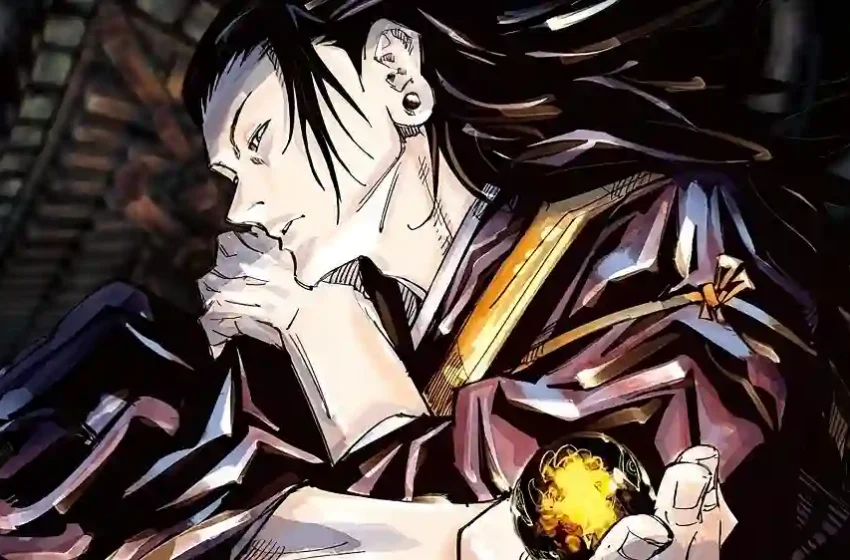
How Geto Suguru Became Jujutsu Kaisen’s Most Complex Villain
Geto Suguru, a essential character in Jujutsu Kaisen, is broadly respected as one of the series’ most charming and multi-dimensional opponents. Whereas at first presented as a promising and respectable jujutsu magician, his change into one of the story’s most complex and awful reprobates is a story circular segment that has captivated fans and started various dialogs. His travel from a courageous figure to a detestable constrain is not as it were compelling but too a confirmation to the complex narrating and character advancement inside Jujutsu Kaisen. To get it how Geto Suguru got to be such a complicated figure, it’s vital to dig profound into his past, his reasoning, and the occasions that eventually driven him down a darker path.
The Beginnings Of Geto Suguru: A Guarantee Of Greatness
When we are to begin with presented to Geto Suguru, he is portrayed as a brilliant and charismatic jujutsu alchemist, preparing nearby Satoru Gojo at the Tokyo Metropolitan Enchantment Specialized College. Nearby Gojo, Geto was once considered a cheerful future of jujutsu divination, appearing incredible potential and amazing quality. His expertise set was uncommon, his mind sharp, and his energy for securing others appeared genuine.
However, Jujutsu Kaisen is not a basic hero-villain story, and Geto Suguru’s change doesn’t take after a ordinary lowlife arc. Instep of being a direct case of a ‘good fellow gone bad,’ his advancement is profoundly layered, impacted by individual battles, ideological contrasts, and, eventually, selling out. This move starts when Geto begins addressing the exceptionally framework that he once devoted his life to.
The Catalyst: A Emergency Of Beliefs
One of the to begin with signs that Geto Suguru’s convictions are moving comes amid the Shibuya Occurrence bend, but the roots of his change can be followed back to prior minutes in the arrangement. His inner struggle starts when he begins to see the world through a distinctive focal point than his peers, especially Gojo. Whereas Gojo sees jujutsu divination as a implies to secure humankind and keep up the adjust of control, Geto begins to see the jujutsu world as a framework of lip service. The to begin with splits in his worldview develop from the realization that the exceptionally individuals they protect—humans—are frequently detached or threatening to the jujutsu alchemists who defend them.
This frustration develops when Geto encounters a noteworthy turning point amid a mission where he is constrained to stand up to the enduring and imbalance confronted by non-sorcerers. It’s amid this period that he starts to see jujutsu magicians as a prevalent lesson of creatures. His disappointment with the need of appreciation for sorcerers’ penances develops, and his conviction in the inborn esteem of non-sorcerers starts to erode.
In an enthusiastic minute of defenselessness, Geto trusts in Gojo around his modern philosophy: he accepts that for the world to alter, non-sorcerers must be dispensed with. His crave to ensure humankind changes into an fixation with cleansing the world of what he sees to be second rate people. This is the starting of Geto Suguru’s plummet into villainy.
The Part: Geto Suguru Vs. Satoru Gojo
Perhaps the most characterizing minute in Geto Suguru’s change is his ideological part from his closest companion and partner, Satoru Gojo. Gojo, who is frequently seen as the extreme alchemist, accepts in the control of the jujutsu framework to ensure and elevate society, in spite of its blemishes. He has confidence in the concept of adjust, accepting that his control may be utilized to secure those who can’t secure themselves. For Gojo, the thought of killing non-sorcerers is a line that ought to never be crossed.
On the other hand, Geto Suguru’s newfound feelings are the polar inverse. In his eyes, jujutsu alchemists are the genuine prevalent creatures, and humans—especially those without reviled energy—are a torment on the world. His thwarted expectation with the existing control structure and his conviction in the predominance of alchemists drive him encourage absent from his previous companion, Gojo. Their ideological clash comes to a bubbling point when Geto chooses to go down the way of killing non-sorcerers to bring around his vision of a unused world order.
The crack between them extends as Geto starts to collect reviled spirits and shape alliances with dull strengths. He assembles a gather of like-minded devotees, all of whom share his radical sees. His extreme disloyalty of the jujutsu world is set when he surrenders from the magician community completely, adjusting himself with effective curses and working toward the killing of humanity.
Once A Defender, Presently A Destroyer
Geto Suguru’s character gets to be more complex as his travel unfurls. He starts as somebody who truly needs to secure individuals, particularly his cherished ones and colleagues, but his thwarted expectation with the world turns him into a man willing to give up anything— and anyone—to accomplish his vision. His want to bring around alter, however extraordinary, exhibits a awful component in his character. His once-pure eagerly are presently twisted by his encounters and the control of curses that abuse his insecurities.
What makes Geto Suguru really captivating as a scalawag is his profound inside battle. He doesn’t see himself as a lowlife in the conventional sense. Instep, he sees himself as a vital drive for alter, a defender of the future magician world that he accepts ought to come to pass. His conviction in the prevalence of jujutsu alchemists, and his readiness to devastate everything to accomplish it, places him on the inverse conclusion of the range from Gojo’s optimistic sees. However, in spite of the abominations he commits, Geto never loses his humankind totally. He remains a character who is clashed, profoundly mindful of the torment he delivers but persuaded that it is the cost for a superior world.
The Appalling Complexity Of Geto Suguru
One of the most surprising angles of Geto Suguru’s character is the level of catastrophe woven into his story. At the heart of his villainy lies a profound sense of misfortune and surrender. As a youthful alchemist, he was hopeful, compassionate, and full of potential. His advancement into the lowlife he gets to be is molded by a world that rejected him and a framework that fizzled to bolster him.
Geto’s catastrophe lies in his misinformed discernment that pulverizing humankind will bring almost the alter he wants. He accepts that as it were by killing non-sorcerers can he make a world where jujutsu magicians are the genuine rulers. His conviction in his exemplary nature is a coordinate result of his significant sense of disloyalty by the exceptionally framework he once served. The framework that was gathered to ensure and elevate him instep deserted him when he required it the most.
This inner struggle gives Geto Suguru a certain profundity that numerous other reprobates need. He is not fiendish for the purpose of being fiendish. Instep, his activities are driven by a want to make the world a way better place—albeit through a profoundly imperfect focal point. His catastrophe is compounded by his mindfulness of the torment he causes but his failure to break free from his distorted ideology.
Conclusion
Geto Suguru’s change from a promising jujutsu magician to one of the series’ most complex and awful reprobates is a confirmation to Jujutsu Kaisen’s profound investigation of ethical uncertainty and character advancement. Once an optimistic and respectable figure, Geto’s move in worldview, his inside battle, and his possible disloyalty of his companions make him one of the most compelling characters in the arrangement. Or maybe than a basic reprobate, Geto Suguru speaks to a appalling figure who accepts in the nobility of his cause, indeed as it leads him down a way of destruction.
The complexity of Geto Suguru’s character, coupled with his appalling drop from elegance, highlights the nuanced narrating that has made Jujutsu Kaisen stand out in the world of anime and manga. His travel raises imperative questions almost the nature of courage, the taken a toll of standards, and the fine line between securing others and controlling them. In the conclusion, Geto Suguru is a update that reprobates, much like heroes, are formed by their encounters and choices—no matter how distant they may stray from their unique way.
